
Eggplant Caviar
A fancy name for an irresistible summer dish

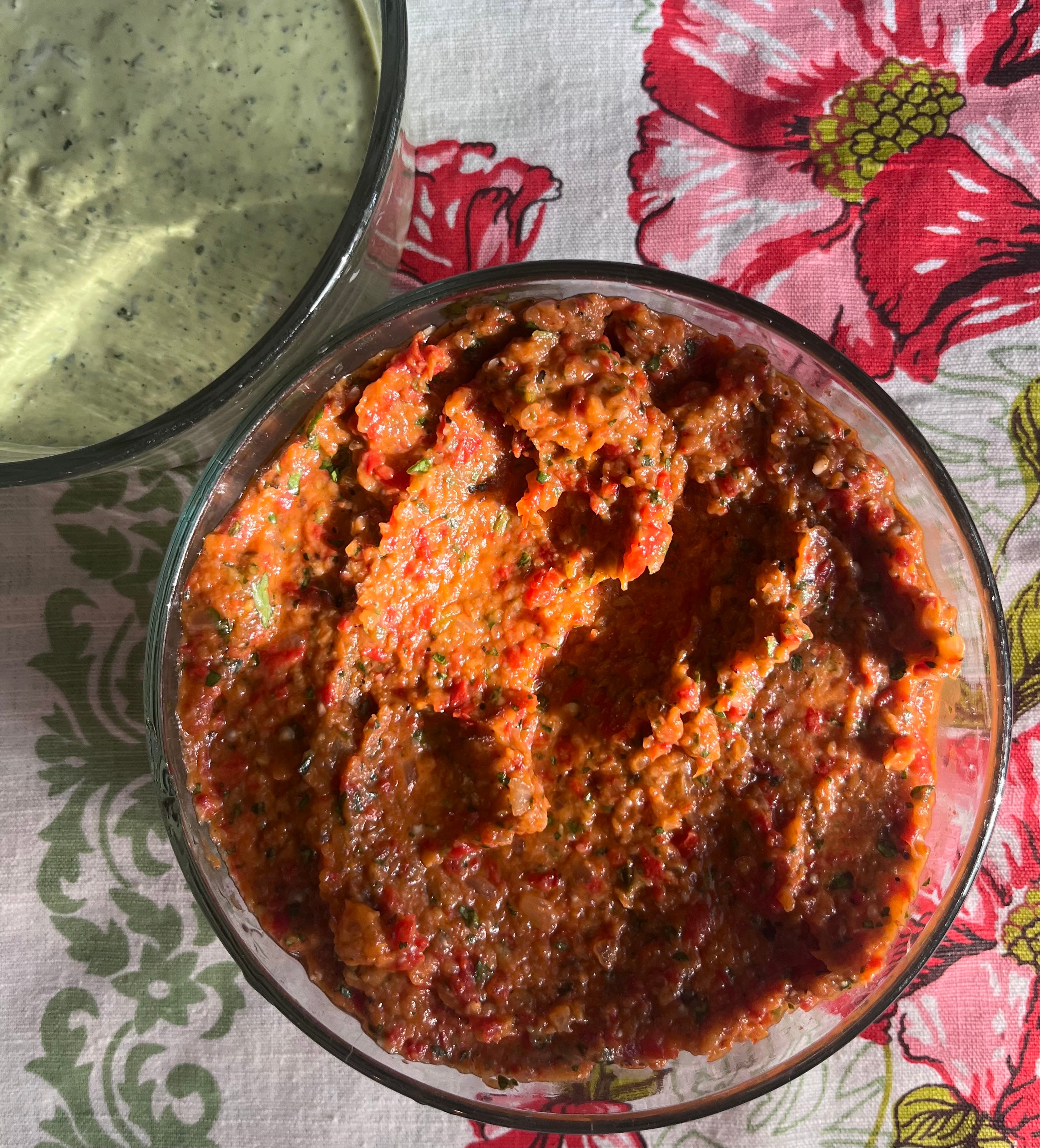
I don’t usually come right out and say this with such force but: you definitely want to make this week’s Eggplant Caviar recipe. Like, immediately. Yes, even if you don’t usually love eggplant.
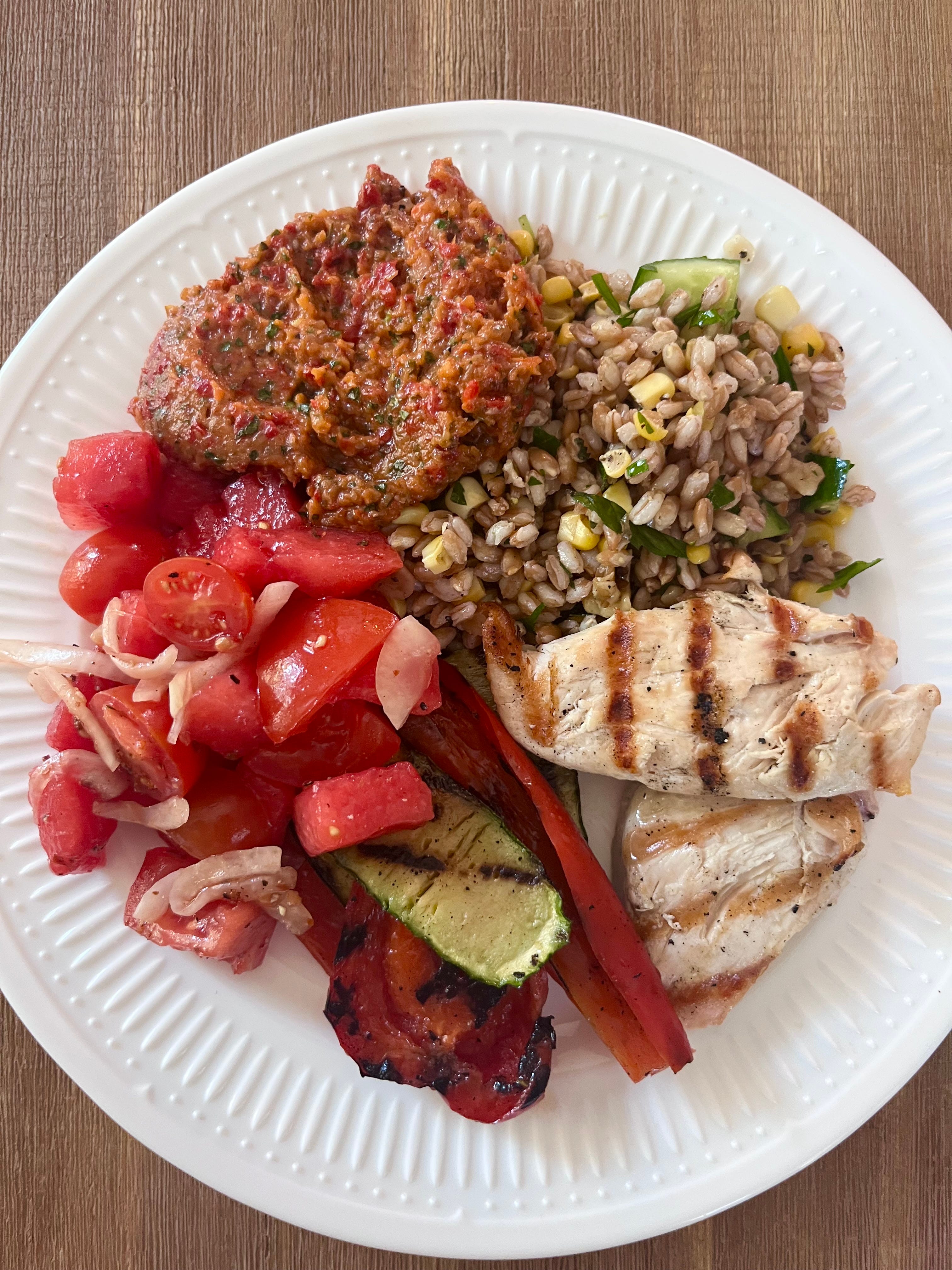
We had friends over for Shabbat dinner last week on a balmy Friday night. And on the table of summery delights (grilled chicken, peppers, and zucchini; watermelon and tomato salad; farro with sweet corn and herbs…) this eggplant caviar was the runaway hit. We layered it on challah. We dolloped it on top of the grilled chicken. The next day I spooned up the leftovers straight from the Tupperware, and had zero regrets.
Despite the name, there are no actual fish eggs in eggplant caviar. The spread, which is also sometimes called “poor man’s caviar,” gets its title from its visual resemblance to fish roe. (And also because, like caviar, it is typically served as an appetizer.) What it does have is a smoky-tangy flavor profile and rich, silky texture that makes it utterly irresistible. Like eating concentrated summer.
Mashed salads made from blackened eggplants can be found across the Middle East and North Africa, with tahini-laden baba ghanouj likely being the best-known. Variations of eggplant caviar, which keep the char and lemon juice + garlic flavor, but leave out the tahini, are common too. Some versions add chopped fresh tomato or roasted red bell pepper (which is how I prefer it, both for the color and flavor it adds), while others stick to aubergine.
Thanks to centuries of Ottoman rule, eggplant caviar spread across Romania, Hungary, and the Balkans. From there, the zesty salad was introduced to Ukraine, Georgia, Azerbaijan, and parts of Russia, where ikra (Russian for caviar) was beloved by Jews and non-Jews alike. If you visit the Soviet-Jewish enclave of Brighton Beach, Brooklyn today, jars of eggplant caviar can be found on every grocery store shelf. But a homemade version, which is fresh-off-the-flame and does not include any additives, tastes even better.

Community Spotlight: Scott Filkins
This past week I had the pleasure of leading fourteen K-12 teachers in a two-day food writing workshop as part of The University of Illinois Writing Project. I was supposed to physically be in Illinois during those two days, but my flight plans were thwarted twice: first by a broken plane (yikes!) and then by a bout of rough storms (sigh…). But even over Zoom, the experience of learning and writing with a bunch of thoughtful and creative educators was incredibly gratifying. These teachers brought their full selves to the table (theirs’ in person, mine virtual), and for that I’m so grateful.
I’m sharing this teaching anecdote because it allows me an opportunity to spotlight one of The Jewish Table’s wonderful community members: Scott Filkins. Scott is the program coordinator of the Writing Project program and a teacher/professor himself. He is also a longtime supporter of The Jewish Table, and a bonafide mensch. You can get to know Scott better at his new Substack newsletter called, Raise the Magic Fork. Learn about his food journey in his first post and if you feel inspired (I have a feeling you might), give him a follow!
Eggplant Caviar
Many eggplant caviar recipes pulse fresh onion into the eggplant mixture, but I prefer mellowing out and lightly caramelizing the onion first for deeper flavor. You still get plenty of bite from the fresh garlic, plus a wonderful silky richness from the browned onions.
Serves 6 to 8
