

Hey there! This week’s recipe is just for paid subscribers to The Jewish Table. If you’ve found your way here but are not yet subscribed for the paid weekly newsletter, you can do that here. You will never miss a recipe or a story, and I’ll be eternally grateful for your support.
Vegetables are my love language. One of my core, identity-forming memories from childhood was the time it was my turn to bring in my favorite snack to preschool. Instead of pretzels or raisins or corn chips, I brought in cut fresh vegetables and my mom’s spinach-yogurt dip. Every child in the class politely passed on my crudité platter, which left a lot of celery sticks and bell pepper strips for me and my two teachers. The humiliation was devastating, but I learned an important lesson about being true to oneself that day.
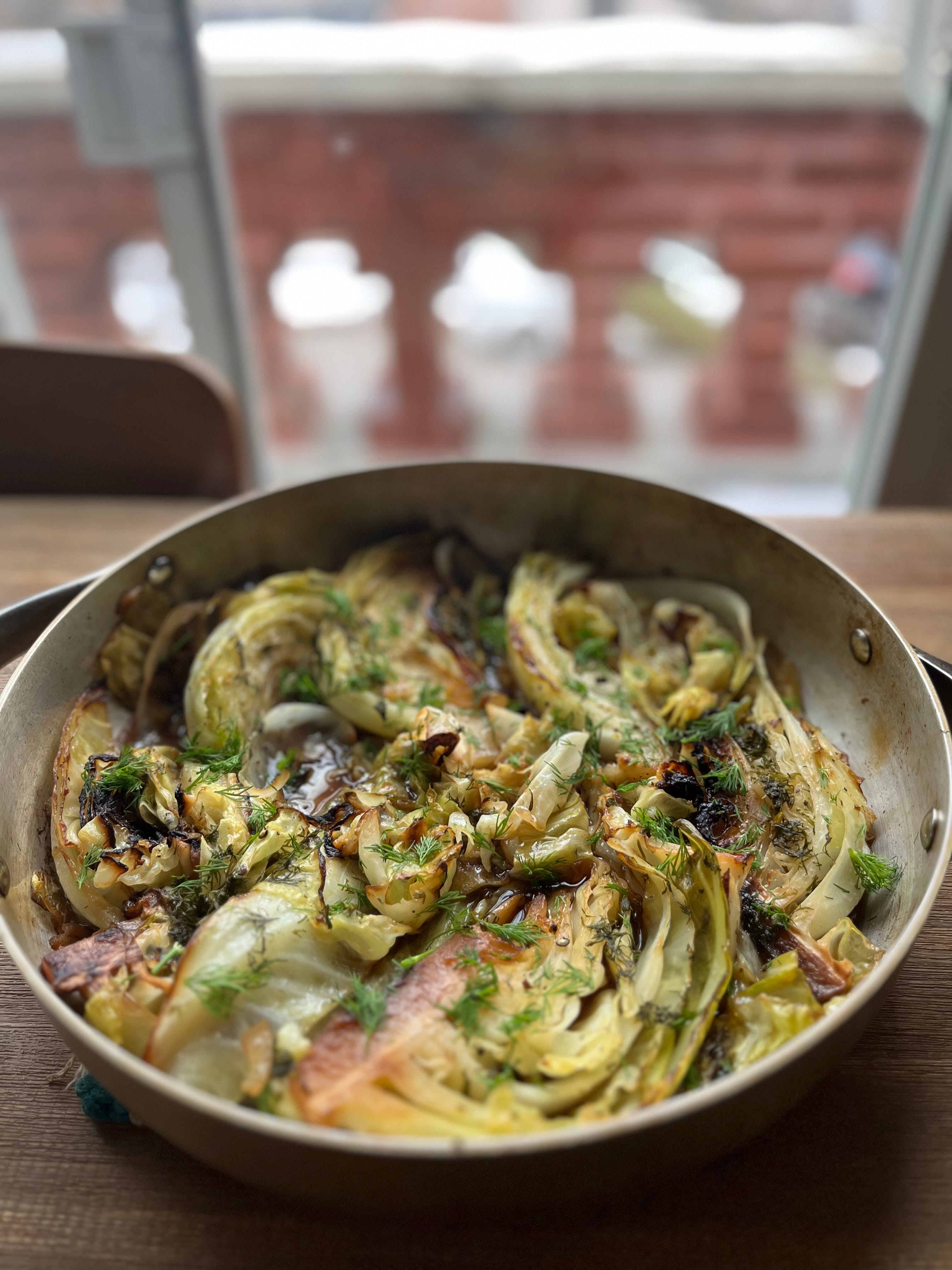
Right now, in the thick of comfort food season, I prefer my veggies roasted or braised with bits of char or golden edges, and and just the right amount of tender chew. And this Melted Cabbage with Dill is delivering all the joy.
Don’t let cabbage’s humble simplicity fool you. It is one of the world’s oldest and most enduring cultivated vegetables that has sustained and nourished countless generations during feast times and times of worry and want. Cabbage’s botanical predecessor, colewort, is noted in the Talmud for its healing properties, and cabbage was considered a panacea by the ancient Romans. Even today, it is touted for its numerous health benefits—everything from promoting stronger bones to providing relief for mastitis. In other words, cabbage is a superfood powerhouse with a reputation that spans millennia.
Not surprisingly, the sturdy green is at home in virtually all corners of Jewish cuisine—from Moroccan vegetable tagines to Persian cabbage dolma. In Ashkenazi cuisine, cabbage ranks next to onions in importance. (And that’s saying something!) Until the arrival and acceptance of the potato to Eastern Europe in the mid 19th-century, cabbage was the shtetl’s dominant vegetable.
My Jewish ancestors served cabbage in a million different ways. They filled the broad leaves with barley or kasha (and, when resources allowed, with meat), rolled them into parcels and simmered them in a sweet and sour sauce. They salted and pressed shredded cabbage into crocks to make sauerkraut, browned and tossed it with noodles, and stuffed it into strudel and knishes. They stirred cabbage into soups enriched with beefy bones, and braised red cabbage with apples and vinegar.
Cabbage is both a comfort and a muse of the Ashkenazi kitchen—an inevitability and a delight. Needless to say, I am a forever fan. And with this week’s recipe, which sears meaty wedges of cabbage until they are blistered and brown, braises them in a flavor-packed broth, and showers the whole mess with a heap of fresh dill, I unpacked a whole new level of love for the crunchy crucifer. Four year old me would be so proud.

Two Actions To Take Right Now
Y’all, I admit it. I am exhausted. I am tired and scared and worn out by the daily travesties to public health, human rights, consumer safety, and human decency coming out of the Trump and Musk circus. So this past weekend, I briefly tagged out and unplugged my brain from the anxiety of it all. I watched TV, got outside, and hung out with my kiddos. And I didn’t feel guilty about it—because being burned out doesn’t help anyone.
After a few big gulps of fresh air, I am ready to tag back in like our families’ safety depends on it. If you are in a tag out moment, lean in to the rest, and come back to us soon. When you’re back, here are two ways to plug in:
5 Calls - Big thanks to my friend, Hannah, for first alerting me to 5 Calls - a platform that makes it SO EASY to call your elected representatives to either thank them for the work they have done to stand up to Trump/Musk, or to urge them to do more to fight back. 5 Calls provides scripts around a bunch of issues plus phone numbers and lots of encouragement. It is great for phone shy folks (like me), and the calls are being heard. I’ve set a goal to make calls three days a week. Join me?
Reclaim Your Attention! You know that thing where you are reading a book, or watching a TV show, or pulling up to a red light—and you feel an uncontrollable urge to check your phone despite having no urgent business to attend to? Or that thing where you wake up in the middle of the night and immediately start scrolling? Or where you start one task at work only to get pulled into a million Slack conversations or social media comment sections, and forget what you were doing in the first place? Yeah, me too. It is easy to see: our phones are stealing our ability to pay attention.
On this week’s Offline podcast (which I love, and highly recommend), the hosts discuss how our attention has become an endangered resource, and “how our society’s commodification of attention has made us miserable while empowering authoritarians like Donald Trump.” The hosts then introduce the beginning of a weekly challenge to help rebuild/repair our attention spans through a series of focus-building exercises. The first week’s exercise: take a 20 minute walk each day, or commute to work, without your phone at arm’s length. Will it feel uncomfortable? Probably. But the goal is to rebuild our attention muscles over time. Think of it a a 20 minute “Shabbat” every day.
Check out Offline to follow along with the weekly exercises to help reclaim your control over your precious focus and attention.
Tu Bishvat on The Jewish Table
Tu Bishvat, the Jewish tree holiday, starts tonight. On Tu Bishvat it is customary to eat foods grown on trees (fruits, nuts, and olives), and also the seven species specifically mentioned in the Torah (wheat, barley, grapes, figs, pomegranates, olives, and dates). Here are some of my favorite Tu Bishvat-friendly recipes from The Jewish Table recipe archive.

Overlapping layers of sunny citrus, crisp and juicy grapes and pomegranate seeds, and nutty pistachios, all drizzled with golden honey.
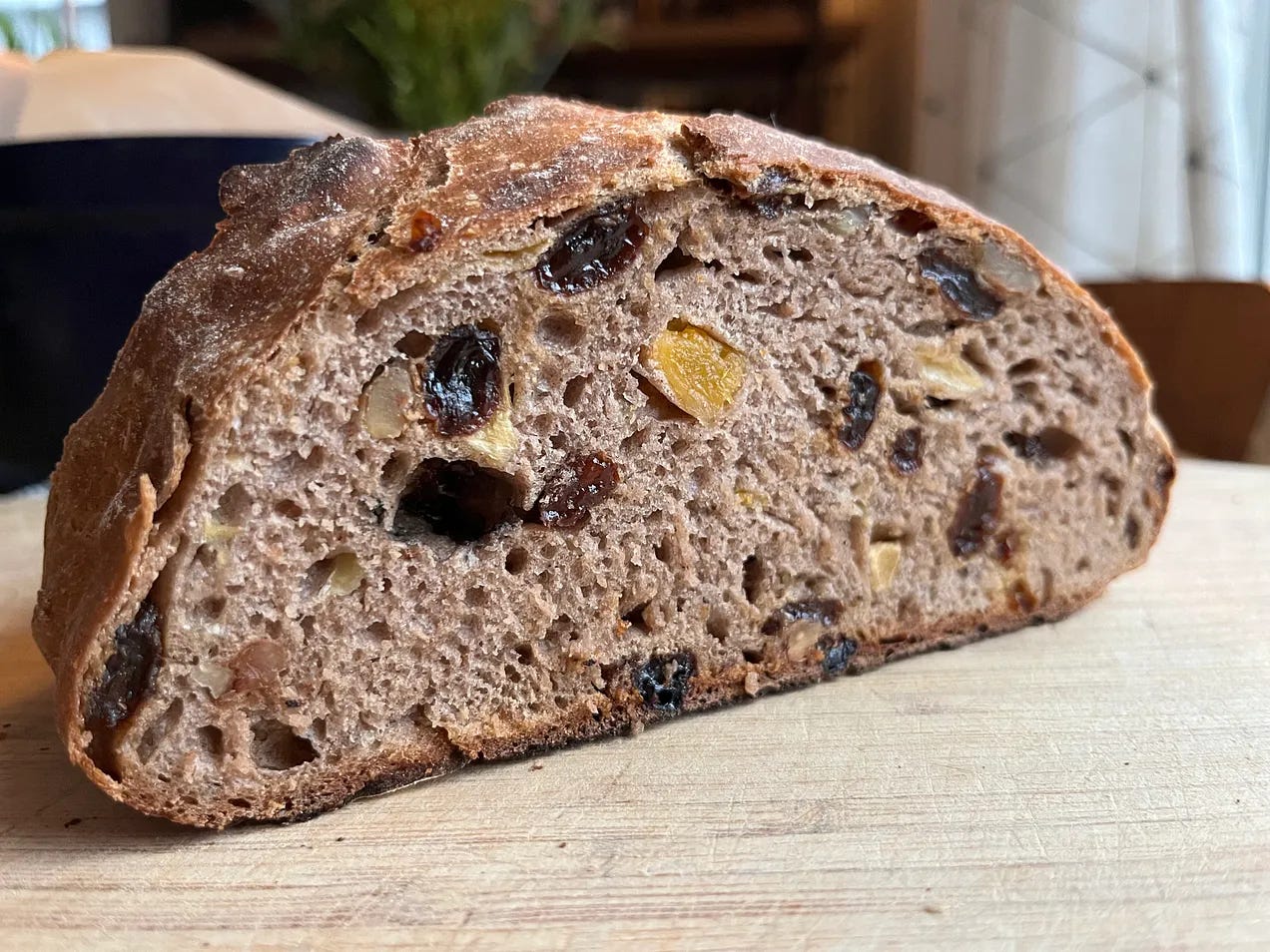
This bread has a hearty, crunchy crust and a wonderfully chewy crumb. It comes perfumed with cinnamon and loaded with walnuts and dried fruits like raisins, dried cherries, figs, apricots, and dried apples.
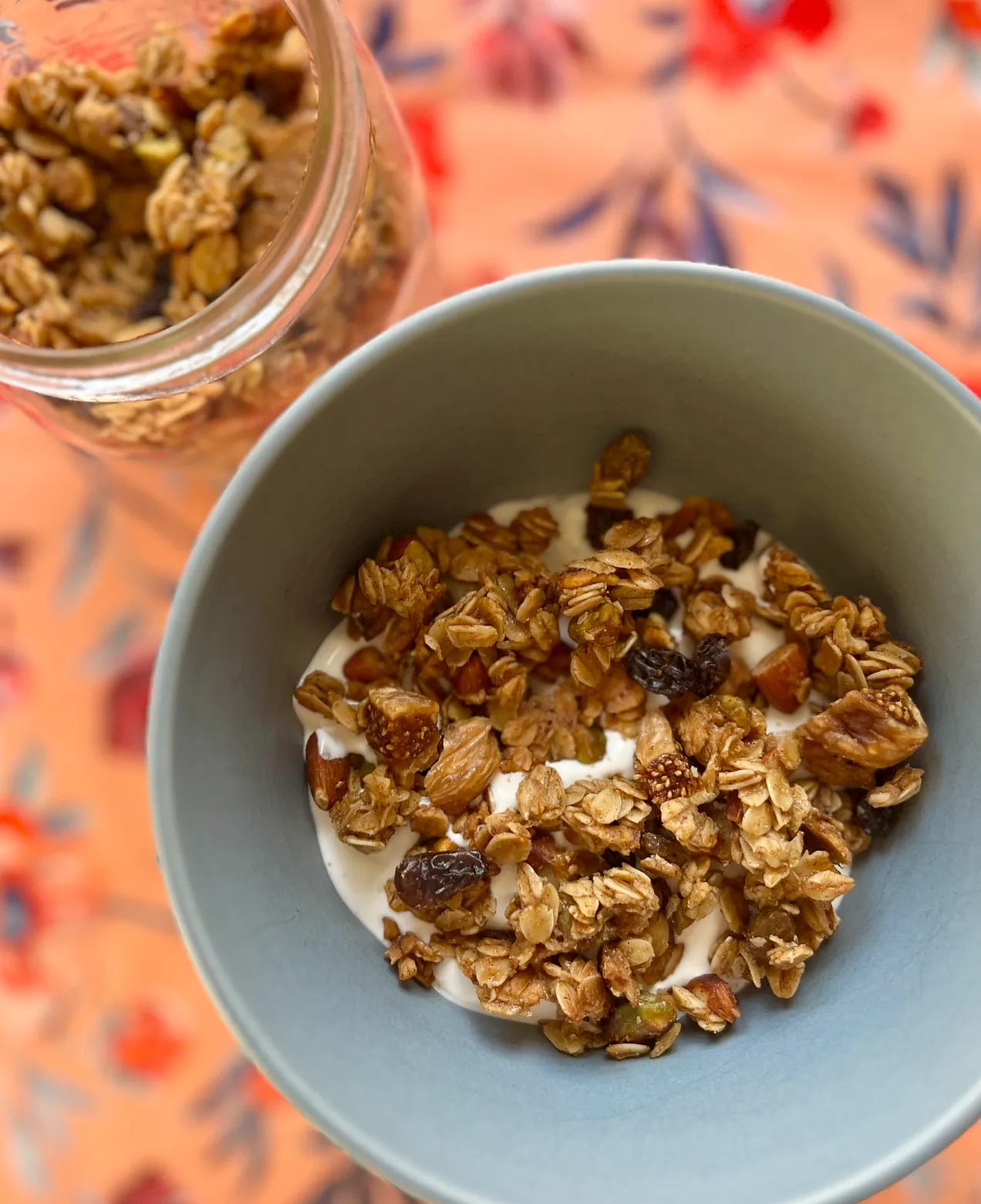
This granola, which combines toasted oats with jammy figs, raisins, almonds, and pistachios plus a heap of lemon zest and juice, tastes like pure sunshine and sea breezes.

This sour cream coffee cake has a tender crumb, a sweet, cardamom-spiced crumble topping, and is chockablock with juicy pears.
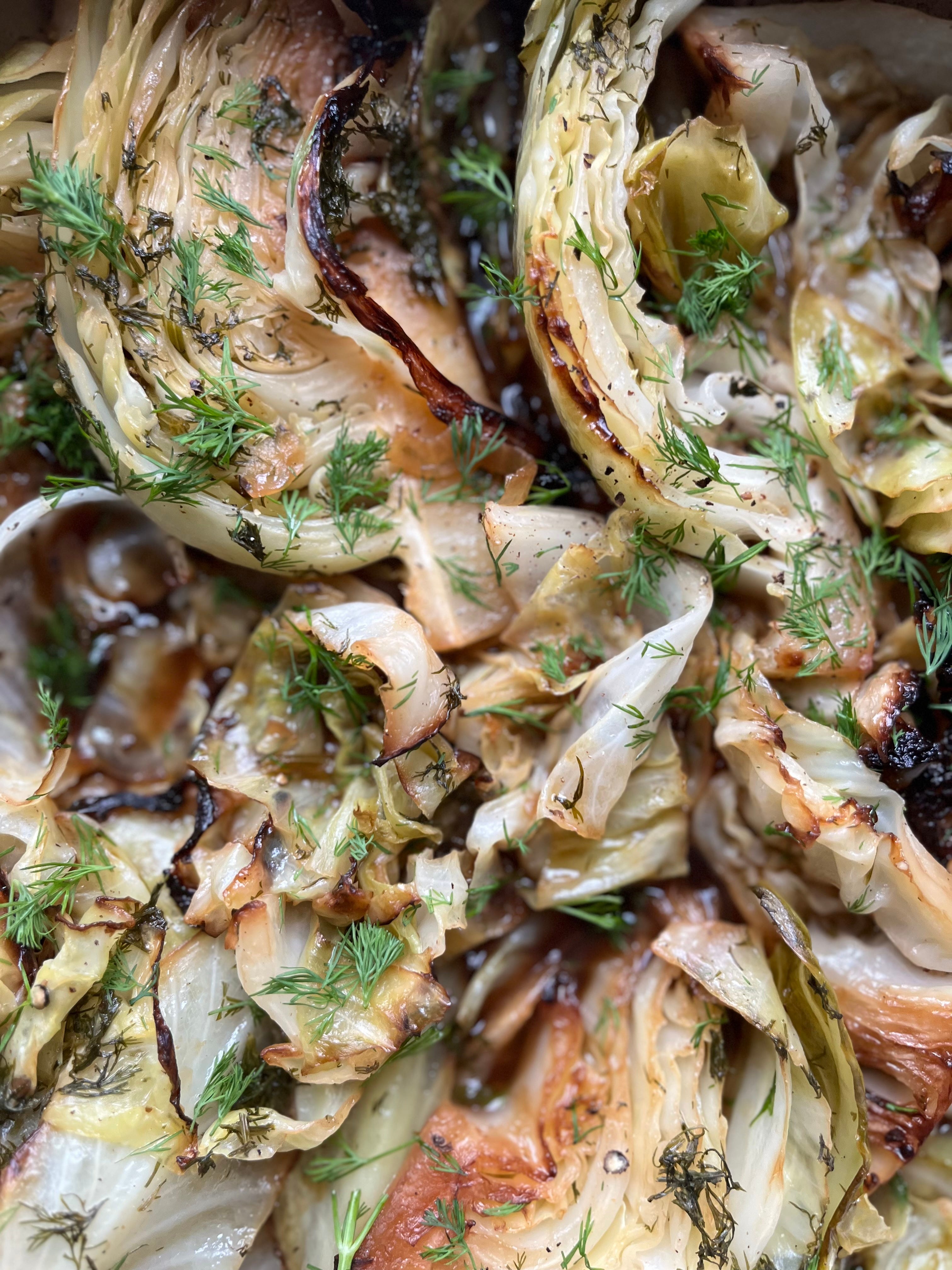
Melted Cabbage Wedges with Dill
In her lovely cookbook, Sababa, Adeena Sussman shares a recipe for “Melted Green Cabbage,” that is her interpretation of the many braised cabbage dishes found on restaurant menus in Tel Aviv. This recipe goes in a more Ashkenazi flavor direction, but I would be remiss not to mention Adeena’s brilliance as an inspiration. Serve this cabbage as a hearty side dish alongside fish, chicken, or tofu with crusty bread for dipping.
Serves 4
Keep reading with a 7-day free trial
Subscribe to The Jewish Table to keep reading this post and get 7 days of free access to the full post archives.